Learn how to create viral YouTube titles that increase CTR, improve rankings, and attract more views using proven SEO, psychology, and YouTube growth strategies.
Every minute, YouTube Video creators upload hundreds of hours of video to YouTube. No matter how amazing your editing, storytelling, or production quality is, your video has one challenge before anyone even presses play—it must convince someone to click.
That decision usually comes down to two things: your thumbnail and your title.
A strong YouTube Video thumbnail grabs attention, but the title gives viewers the reason to click. According to YouTube’s own guidance, creators should choose either a searchable title or an intriguing title depending on where they expect viewers to discover the video, then measure performance using CTR in YouTube Analytics.
If you’ve ever wondered why two videos on the same topic perform completely differently, the answer often isn’t the content—it’s the packaging.
This guide will teach you exactly how to create viral YouTube titles that improve your YouTube CTR, increase discoverability, and help your videos reach more viewers naturally.
Why YouTube Titles Matter More Than Ever?
Many new YouTube creators believe YouTube success starts with expensive cameras or advanced editing software. While those elements can improve production quality, they don’t determine whether someone clicks on your video. Before viewers can appreciate your editing skills, they first need a reason to open the video. That’s exactly where your title becomes one of the most valuable assets on your channel.
Think of your title as the headline of a newspaper. Even the best story won’t be read if the headline fails to spark curiosity or communicate value. On YouTube, viewers scroll through hundreds of videos every day. Your title competes against thousands of others within seconds.
A great title performs two jobs at the same time:
- It helps YouTube understand what your video is about.
- It persuades real people that your video is worth watching.
Successful YouTube Video creators don’t simply describe their videos. Instead, they highlight a benefit, create curiosity, or promise a specific outcome while accurately representing the content. YouTube itself recommends keeping the most important words near the beginning, avoiding excessive capitalization or emojis, and ensuring the title and thumbnail work together instead of repeating each other.
What Makes a YouTube Title Go Viral?
There isn’t a magical formula that guarantees millions of views. Viral titles share several characteristics that consistently improve the chances of earning clicks.
Search Intent
Some viewers actively search for answers on YouTube.
Examples include:
- How to Grow on YouTube
- Best Gaming Laptop 2026
- iPhone Camera Tips
These viewers already know what they want. Your title should clearly include the keyword they’re searching for.
Instead of writing:
“My Editing Process”
Write:
How I Edit YouTube Videos in Under 20 Minutes
The second version instantly communicates value while naturally including searchable keywords.
Viewer Curiosity
Browse traffic works differently.
These viewers weren’t searching for your topic. They’re simply scrolling through the Home page or Suggested Videos.
Titles like:
- I Tried YouTube for 30 Days…
- This Small Change Doubled My Views
- Nobody Talks About This YouTube Trick
Create curiosity without becoming misleading.
The best viral titles balance clarity with intrigue. They tell viewers enough to understand the topic while leaving an unanswered question that encourages a click.
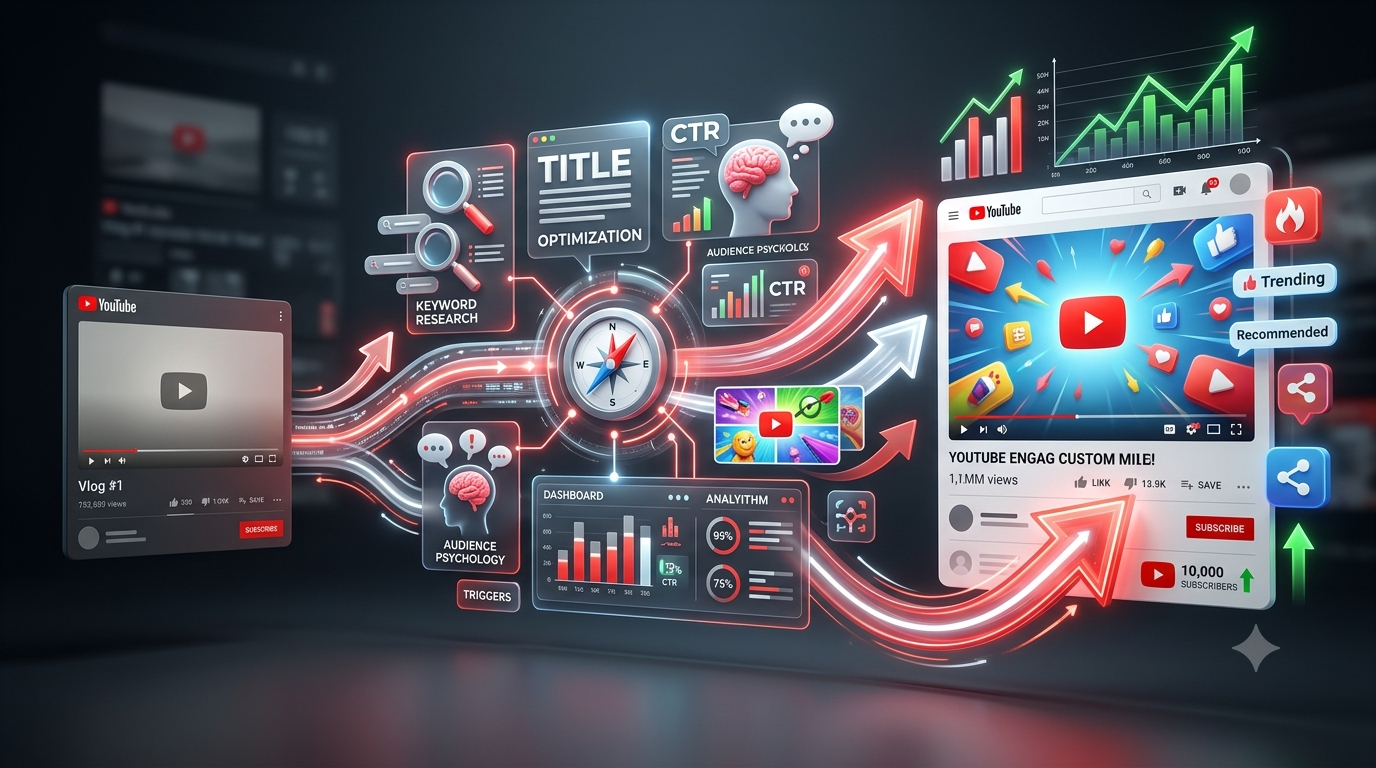
How the YouTube Algorithm Uses Titles?
Many YouTube Video creators mistakenly believe YouTube’s algorithm “reads” titles and immediately ranks videos.
That’s only partially true.
Your title helps YouTube understand your video’s topic, but the platform also watches how real viewers respond after seeing it. If people click and continue watching, YouTube gains confidence that your content satisfies viewers and may recommend it more broadly. Titles therefore influence discoverability indirectly through both relevance and viewer behavior.
A well-written title helps YouTube determine:
| Ranking Factor | Why It Matters |
|---|---|
| Main keyword | Topic relevance |
| Search intent | Matching user queries |
| CTR | Initial interest |
| Watch time | Whether expectations were met |
| Audience retention | Long-term recommendation signal |
Notice something interesting?
The title doesn’t work alone.
It works alongside:
- Thumbnail
- Audience retention
- Watch time
- Viewer satisfaction
That’s why misleading clickbait often fails. It may increase clicks initially but usually hurts watch time and audience trust over time.
Understanding Click-Through Rate (CTR)
CTR stands for Click-Through Rate.
It’s simply the percentage of people who click after seeing your video impression.
Example:
- 10,000 impressions
- 700 clicks
CTR = 7%
Higher isn’t always better because every niche behaves differently. Instead of chasing a specific number, compare each video’s CTR against your own channel averages. YouTube recommends reviewing CTR during the first 24 hours after publishing—especially from Home, Suggested, and Subscriptions—to understand how effectively your title and thumbnail attract viewers.
Improving CTR often comes from small changes:
- Better wording
- Stronger emotional hook
- Clearer benefit
- Improved keyword placement
- Better thumbnail alignment
One extra percentage point in CTR can translate into thousands of additional views over time if your content continues satisfying viewers.
The Psychology Behind Viral YouTube Titles
If you’ve ever clicked on a video and immediately thought, “I need to know what happens next,” you’ve experienced title psychology in action. Successful YouTube creators don’t rely on luck—they understand how people make decisions while scrolling.
A great title appeals to human emotions before logic. People click because they expect to learn something valuable, solve a problem, avoid a mistake, or satisfy their curiosity. That’s why viral titles often trigger emotions like excitement, surprise, urgency, or intrigue.
Here are the psychological principles behind high-performing YouTube titles:
Curiosity Gap
The curiosity gap is the space between what the viewer knows and what they want to know.
Examples:
- I Tested Every YouTube Thumbnail Trick—Only One Worked
- I Made One Small Change That Doubled My Views
- The Biggest YouTube SEO Mistake You’re Probably Making
These titles reveal enough information to create interest while leaving an unanswered question that encourages a click.
Emotional Triggers
People naturally respond to emotions. Words like Amazing, Secret, Proven, Easy, Fast, Hidden, Shocking, and Ultimate can increase attention when used naturally.
Compare these two titles:
- YouTube SEO Tips
- 7 Proven YouTube SEO Tips That Increased My Views
The second title is more specific, benefit-driven, and emotionally engaging.
Fear of Missing Out (FOMO)
FOMO works because nobody wants to miss an opportunity.
Examples:
- Don’t Upload Another Video Until You Watch This
- You’re Losing Views Because of This Mistake
- Stop Making These YouTube SEO Errors
Use FOMO carefully. The content must genuinely deliver on the promise.
Numbers and Specificity
Specific titles generally outperform vague ones because they create clear expectations.
Instead of:
How to Grow on YouTube
Try:
11 YouTube Growth Tips That Actually Worked in 2026
Numbers make titles feel organized, practical, and easier to consume.
Question-Based Headlines
Questions encourage viewers to mentally answer before clicking.
Examples:
- Why Are My YouTube Videos Not Getting Views?
- Can Small YouTube Channels Still Go Viral?
- Is YouTube SEO Still Worth It in 2026?
Question titles work particularly well for educational content and tutorials.
Best YouTube Title Formulas
You don’t have to reinvent the wheel every time you upload. Many successful YouTube Video creators use proven title structures and adapt them to their niche.
| Formula | Example |
|---|---|
| How to | How to Create Viral YouTube Titles |
| Number List | 15 YouTube Title Ideas That Increase CTR |
| Mistake | 7 YouTube Title Mistakes Killing Your Views |
| Case Study | How I Gained 100K Views with Better Titles |
| Challenge | I Used AI to Write YouTube Titles for 30 Days |
| Before & After | Before vs After Optimizing My YouTube Titles |
| Secrets | 10 YouTube Title Secrets Creators Rarely Share |
| Beginner Guide | YouTube Title Writing Guide for Beginners |
Choose a formula that matches your content and audience rather than forcing every video into the same pattern.
Real Viral YouTube Title Examples
Studying successful titles is one of the fastest ways to improve your own writing. Notice how these examples promise a benefit, create curiosity, or solve a specific problem without becoming misleading.
- How I Got My First 100,000 Subscribers
- I Tried Posting Every Day for 30 Days
- This One Trick Increased My CTR by 40%
- Stop Using These YouTube SEO Myths
- I Tested 25 Thumbnail Designs—Here’s the Winner
- Why Your Videos Aren’t Getting Recommended
- The Truth About YouTube’s Algorithm
- I Copied MrBeast’s Strategy for One Week
- The Biggest YouTube Mistake Beginners Make
- I Started a New Channel from Zero Subscribers
Instead of copying these titles word for word, study the structure and adapt it to your own topic. Originality combined with proven psychology is far more effective than imitation.
How to Use Keywords Naturally
Keywords are still important because they help YouTube understand what your content is about. The key is to use them naturally instead of stuffing them into every title.
For example, if your primary keyword is How to Create Viral YouTube Titles, there’s no need to repeat similar phrases unnecessarily. A title like:
How to Create Viral YouTube Titles That Increase CTR
is much cleaner than:
How to Create Viral YouTube Titles | Viral YouTube Titles | Best YouTube Titles
Keyword stuffing makes titles difficult to read and can reduce click-through rates.
A simple keyword strategy is:
- Place the primary keyword near the beginning.
- Use only one main keyword per title.
- Add one compelling benefit or curiosity hook.
- Keep the wording natural and conversational.
Best Title Length for YouTube
Although YouTube allows longer titles, shorter and clearer titles often perform better on mobile devices because they’re less likely to be truncated.
A practical guideline is:
- Ideal length: 45–60 characters
- Maximum: Around 70 characters before many devices shorten the display
Keep your most important words at the beginning so viewers immediately understand the topic.
Thumbnail vs Title
Your YouTube Video thumbnail and title should work together—not compete.
| Thumbnail | Title |
|---|---|
| Creates visual curiosity | Explains the value |
| Grabs attention | Encourages the click |
| Uses minimal text | Uses searchable keywords |
| Supports the story | Completes the message |
For example:
Thumbnail: 0 Views → 100K Views
Title: How I Created Viral YouTube Titles That Doubled My CTR
The thumbnail sparks curiosity, while the title explains what viewers will learn.
Common YouTube Video Title Mistakes
Avoid these common mistakes if you want better CTR and long-term channel growth:
- Using clickbait that the video doesn’t deliver.
- Writing titles that are too long.
- Ignoring searchable keywords.
- Using ALL CAPS excessively.
- Adding too many emojis or symbols.
- Creating vague titles with no clear benefit.
- Copying viral titles without adapting them to your content.
Your goal isn’t simply to get clicks—it’s to attract the right audience who will stay and watch.
Key Takeaways
- A strong YouTube title improves discoverability and click-through rate.
- Balance SEO keywords with human curiosity.
- Pair your title with a compelling thumbnail.
- Focus on solving a problem or promising a clear benefit.
- Test different approaches and learn from YouTube Analytics.
- Keep titles concise, specific, and truthful.
- Build trust with your audience by delivering exactly what your title promises.
Final Verdict
Learning how to create viral YouTube titles is one of the highest-impact skills any creator can develop. Even small improvements in your title strategy can increase impressions, improve click-through rate, and help your videos reach a wider audience over time.
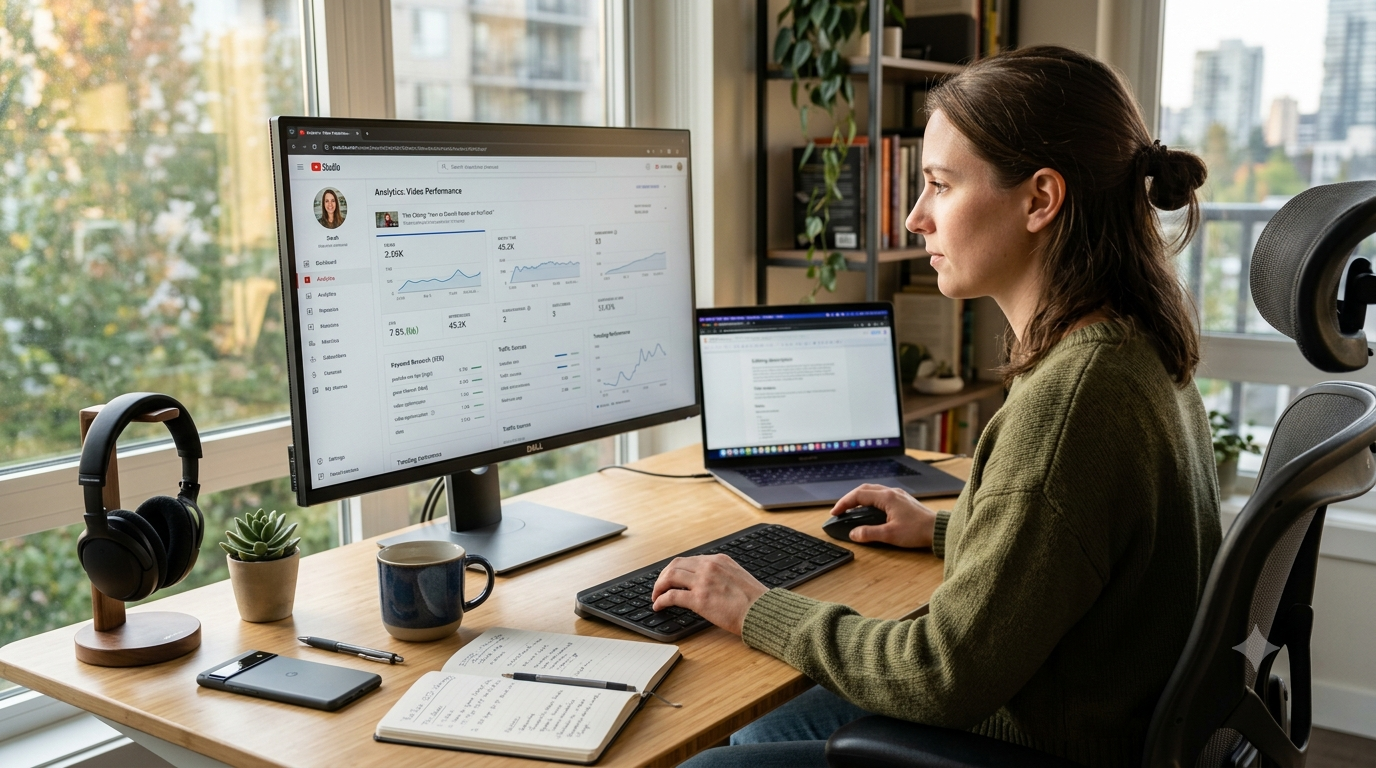
Remember that no title can compensate for poor content—but an excellent video with a weak title may never receive the attention it deserves. Combine keyword research, viewer psychology, and honest storytelling to create titles that attract clicks while accurately representing your content. Review your analytics regularly, test new approaches, and refine your strategy based on real viewer behavior.
Start treating every title as an opportunity to earn a click, build trust, and grow your channel. The creators who consistently improve their packaging are often the ones who see the biggest long-term results.
Frequently Asked Questions (FAQs)
1. What is the ideal YouTube title length?
Aim for 45–60 characters whenever possible. This keeps titles readable on both desktop and mobile while ensuring important keywords appear first.
2. Do keywords still matter for YouTube titles?
Yes. Relevant keywords help YouTube understand your video’s topic and improve its chances of appearing in search results.
3. Should I use clickbait titles?
Avoid misleading clickbait. Instead, create curiosity while ensuring your video delivers exactly what the title promises.
4. How can I improve my YouTube CTR?
Use compelling titles, eye-catching thumbnails, clear value propositions, and review YouTube Analytics to identify what resonates with your audience.
5. Can I change my YouTube title after publishing?
Absolutely. Many creators update titles after analyzing CTR and audience response, but make changes thoughtfully and give YouTube time to collect meaningful performance data.